Articles
Create and manage existing articles
- Total Articles
- 2
- Published
- 2
- Pending
- 0
- Progress
- 100%
Add New Article
Articles List
A list of all your articles with their current status.
| Title | Body Text | Image | Status | Actions |
|---|---|---|---|---|
Potential of ‘The Magic Triangle’: CRM, ERP and BI Integration | <p style="border-color: rgb(221, 222, 223); margin-block: 0px 1.2em; color: rgb(54, 54, 54); font-family: Inter;"><b style=""><font size="5">The Magic Triangle Methodology is a concept that suggests there must be an effective link between Customer Relationship Management (<span style="border-color: rgb(221, 222, 223);">CRM</span>), Enterprise Resource Planning (<span style="border-color: rgb(221, 222, 223);">ERP</span>) and Business Intelligence (<span style="border-color: rgb(221, 222, 223);">BI</span>) systems for efficient business operations. These three core components are essential for business success in today’s highly competitive markets, as they enable organizations to manage data effectively and streamline their processes.</font></b></p><p style="border-color: rgb(221, 222, 223); margin-block: 0px 1.2em; color: rgb(54, 54, 54); font-family: Inter; font-size: 16px;">In order to gain maximum efficiency from these systems, it is important that the CRM, ERP and BI elements of the system all integrate seamlessly with each other. For instance, an integrated system would allow customer data stored in the CRM database to be retrieved via a BI query; likewise, information generated by the ERP module could also be accessed through a BI query or report. By linking all three together into one unified platform, organizations can utilize shared resources across their entire operation more efficiently – leading to cost savings and improved business performance overall.</p><p style="border-color: rgb(221, 222, 223); margin-block: 0px 1.2em; color: rgb(54, 54, 54); font-family: Inter; font-size: 16px;">Having this type of integration also makes it easier for businesses to get better insight into their customers’ needs and behaviors so they can create products or services tailored towards those requirements much faster than if they had only used standalone CRM or ERP solutions. Additionally, having access to real-time data analysis enables companies to make smarter decisions on operational matters such as inventory levels or production cycles which can significantly reduce costs while improving customer service quality at the same time.</p><p style="border-color: rgb(221, 222, 223); margin-block: 0px 1.2em; color: rgb(54, 54, 54); font-family: Inter; font-size: 16px;">However, creating an effective ‘magic triangle’ of IT systems isn’t always easy – especially since different software programs have varying levels of compatibility between them. Organizations need experienced professionals who understand both how these different components interact with each other but also how they fit within existing company structures & processes in order provide complete coverage over the full circle of sales operations & control activities.</p><blockquote class="wp-block-quote is-layout-flow wp-block-quote-is-layout-flow" style="border-color: rgb(221, 222, 223); border-left-width: 4px; font-family: georgia, "Times New Roman", times, serif; font-size: 1.3em; margin-top: 15px; margin-bottom: 15px; padding-left: 30px; position: relative; overflow-wrap: break-word; color: rgb(54, 54, 54);"><p style="border-color: rgb(221, 222, 223); margin-block: 0px;">This is where <strong style="border-color: rgb(221, 222, 223);">Normatech</strong> plays a crucial role. As a company specializing in CRM, ERP and BI integrations, Normatech helps businesses establish seamless communication between their systems, ensuring that data flows smoothly across departments and platforms. With a deep understanding of enterprise applications and business intelligence, Normatech enables companies to turn raw data into actionable insights that drive smarter decisions and greater efficiency.</p></blockquote><p style="border-color: rgb(221, 222, 223); margin-block: 0px 1.2em; color: rgb(54, 54, 54); font-family: Inter; font-size: 16px;">Implementing such a complex ecosystem requires a partner who understands the underlying science of data flow. <strong style="border-color: rgb(221, 222, 223);">Normatech</strong> offers a unique combination of theoretical depth and practical expertise.</p><p style="border-color: rgb(221, 222, 223); margin-block: 0px; color: rgb(54, 54, 54); font-family: Inter; font-size: 16px;">The “Magic Triangle” methodology was pioneered by <strong style="border-color: rgb(221, 222, 223);">Normatech’s CEO and Founder, Ing. George Maisuradze</strong> . His framework is backed by his <strong style="border-color: rgb(221, 222, 223);">scientific articles</strong> on the integration of CRM, ERP, and BI systems. Under his leadership, Normatech ensures your infrastructure is not just connected, but harmonized – turning his research into a validated framework for long-term growth and operational excellence.</p> | -1768290471331-441351055.webp) | Published | |
HRM Platforms and Their Role in Transforming Organizational Workflows | <span style="background-color: transparent;"><font size="3">Human Resource Management (HRM) is a core function in every organization, responsible for managing people, enhancing employee performance, and aligning workforce capabilities with organizational goals. In today’s digital era, traditional HRM practices are rapidly evolving with the adoption of HRM platforms—technology-driven systems that automate, integrate, and optimize human resource processes. Together, HRM and HRM platforms play a crucial role in transforming organizational workflows, improving efficiency, transparency, and strategic decision-making.</font></span><div><h2><b><font size="3"><br></font><font size="5">Understanding Human Resource Management (HRM)</font></b></h2><div><font size="3"><br></font></div>
<p data-start="914" data-end="1250"><font size="3">Human Resource Management refers to the strategic approach to managing an organization’s workforce effectively and efficiently. It encompasses a wide range of activities, including recruitment and selection, training and development, performance management, compensation and benefits, employee relations, and compliance with labor laws.</font></p>
<p data-start="1252" data-end="1661"><font size="3">The primary objective of HRM is not only to hire and retain talented employees but also to create a productive work environment where employees can grow, remain engaged, and contribute meaningfully to organizational success. Modern HRM has shifted from administrative and operational tasks toward a more strategic role, focusing on talent development, organizational culture, and long-term workforce planning.</font></p><p data-start="1252" data-end="1661"><font size="5"><b><br></b></font></p>
<h3 data-start="1663" data-end="1690"><font size="5"><b>What Are HRM Platforms?</b></font></h3><div><font size="5"><b><br></b></font></div>
<p data-start="1692" data-end="2050"><font size="3">HRM platforms, also known as Human Resource Information Systems (HRIS) or Human Capital Management (HCM) systems, are digital solutions designed to manage HR processes through a centralized platform. These systems integrate various HR functions into one unified interface, allowing organizations to automate repetitive tasks and store employee data securely.</font></p>
<p data-start="2052" data-end="2385"><font size="3">Common features of HRM platforms include employee records management, payroll processing, attendance and leave tracking, recruitment management, performance appraisal systems, learning and development modules, and analytics dashboards. Popular HRM platforms include SAP SuccessFactors, Workday, BambooHR, Oracle HCM, Zoho People and now Normativo!</font></p><p data-start="2052" data-end="2385"><font size="5"><b><br></b></font></p>
<h3 data-start="2387" data-end="2454"><font size="5"><b>Transformation of Organizational Workflow Through HRM Platforms</b></font></h3><div><font size="3"><br></font></div>
<p data-start="2456" data-end="2903"><font size="3">HRM platforms significantly transform organizational workflows by streamlining processes and reducing manual intervention. One of the most notable changes is automation. Tasks such as payroll calculations, attendance tracking, leave approvals, and benefits administration can be completed automatically, saving time and minimizing human error. This allows HR professionals to focus on strategic initiatives rather than routine administrative work.</font></p>
<p data-start="2905" data-end="3230"><font size="3">Another key transformation is improved data accessibility and accuracy. HRM platforms centralize employee information, making it easily accessible to authorized users across departments. Managers can quickly review performance data, attendance records, or training progress, enabling faster and more informed decision-making.</font></p>
<p data-start="3232" data-end="3567"><font size="3">HRM platforms also enhance communication and collaboration within organizations. Employee self-service portals allow staff to update personal information, apply for leave, access payslips, and enroll in training programs without direct HR intervention. This transparency improves employee satisfaction and reduces workflow bottlenecks.</font></p>
<p data-start="3569" data-end="3914"><font size="3">From a strategic perspective, HR analytics and reporting tools embedded in HRM platforms provide valuable insights into workforce trends, such as employee turnover, engagement levels, skill gaps, and productivity patterns. These insights support evidence-based decision-making and help organizations align HR strategies with business objectives.</font></p><p data-start="3569" data-end="3914"><font size="3"><br></font></p>
<h3 data-start="3916" data-end="3967"><font size="5"><b>Impact on Organizational Efficiency and Culture</b></font></h3><div><font size="5"><b><br></b></font></div>
<p data-start="3969" data-end="4311"><font size="3">By optimizing workflows, HRM platforms contribute to higher organizational efficiency and consistency. Standardized processes ensure compliance with policies and regulations while reducing operational risks. Moreover, the adoption of digital HR systems promotes a culture of accountability, continuous learning, and performance-driven growth.</font></p>
<p data-start="4313" data-end="4547"><font size="3">HRM platforms also support remote and hybrid work models by enabling cloud-based access to HR services. This flexibility has become increasingly important as organizations adapt to globalized and digitally connected work environments.</font></p><p data-start="4313" data-end="4547"><font size="5"><b><br></b></font></p>
<h3 data-start="4549" data-end="4563"><font size="5"><b>Conclusion</b></font></h3><div><font size="3"><br></font></div>
<p data-start="4565" data-end="5140"><font size="3">Human Resource Management remains a vital function for organizational success, but its effectiveness is significantly enhanced through the use of HRM platforms. By automating processes, improving data management, and enabling strategic workforce planning, HRM platforms transform organizational workflows and redefine how HR contributes to business performance. Organizations that successfully integrate HRM platforms gain a competitive advantage through improved efficiency, better employee experiences, and stronger alignment between human capital and organizational goals.</font></p></div> | 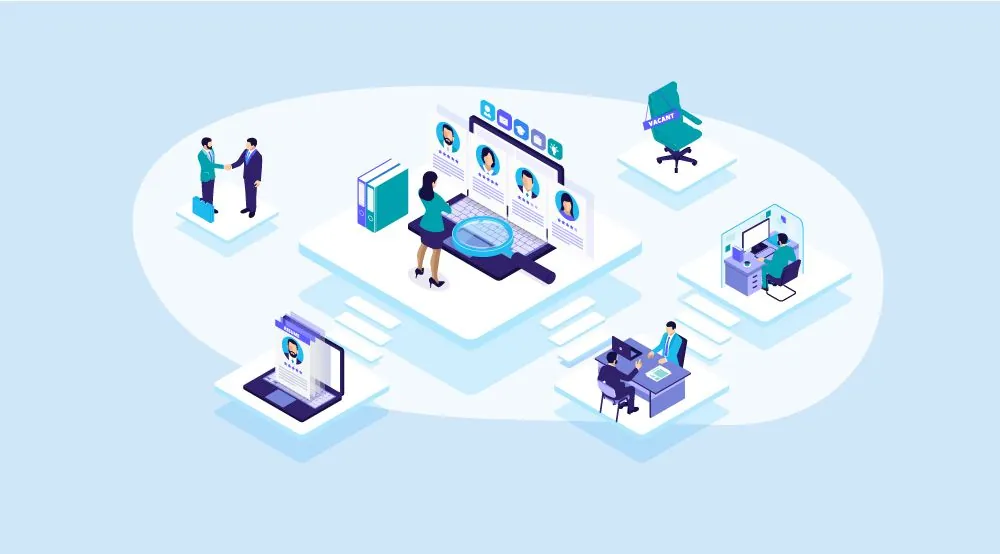 | Published |